Best AI Hair Analysis Apps for Shopify Haircare Brands in 2026

A practical breakdown of how different types of AI hair personalization tools compare, so you can find the right fit without wasting months on the wrong one.

+88%
Quiz Completion Rate
+45%
AOV Lift
85%
First-Time Orders

Hair is genuinely one of the hardest categories to shop online. Unlike skincare, where a basic skin type gives you a reasonable starting point, hair involves a combination of variables: porosity, density, curl pattern, scalp condition, color treatment history. Most shoppers don't fully understand these about themselves, and that's not their fault. It's just complex.

What that means practically is that generic product pages don't work. Shoppers either buy what they've always bought, guess wrong and return it, or leave. None of those outcomes are good for your brand.

This guide breaks down the four main types of AI hair analysis tools available to Shopify brands in 2026 and what you actually need to know before choosing one.

Why Haircare Brands Can't Afford Generic Anymore

Haircare shoppers are more ingredient-aware than they were five years ago. They read labels. They research. And they notice when a brand isn't actually speaking to their hair.

πŸ’‡
Most shoppers misidentify their own hair typePorosity, density, curl pattern: these aren't things people intuitively know. A good diagnostic experience does that work for them, which means recommendations land better from the very first interaction.
πŸ“ˆ
Guided discovery consistently lifts AOVWhen a shopper is recommended a routine rather than a single product, basket size grows naturally. Haircare brands using AI personalization see AOV lifts of 28 to 88%, because the recommendation actually makes sense for their hair.
🌍
One platform can serve very different hair profilesA curl specialist brand and a professional salon brand have completely different customers. The right AI platform adapts to both, serving relevant recommendations regardless of hair type, market, or language.
πŸ“©
Hair data is unusually durable for lifecycle marketingSomeone's hair type doesn't change week to week. That makes quiz-captured hair data one of the most reliable first-party signals you can build into Klaviyo, powering replenishment reminders, new launch targeting, and post-purchase flows that stay relevant.
πŸ€–
The brands building profiles now are positioned for AI chatConversational AI is becoming a real shopping channel. Brands that already know their customers' hair profiles will serve personalized recommendations through chat and voice interfaces far more effectively than those starting from scratch.

6 Things to Look For Before You Commit

Not all hair tools do the same thing, even when they use similar language. Here's what actually separates a platform that performs from one that looks good in a demo.

πŸ”¬
Diagnostic depthDoes it assess hair type, porosity, density, scalp condition, color treatment history, and styling habits? Or does it ask four questions and call it personalization? The difference matters more in haircare than any other beauty category.
πŸ›’
Native Shopify integrationCan it connect directly to your catalog without a developer? Native integration means faster launch, real-time product sync, and results pages that link straight to your cart.
πŸ“Š
First-party data and CRM syncHair profile data is only valuable if it leaves the platform. Look for automatic sync to Klaviyo, Omnisend, Yotpo, or your existing CRM. If data stays siloed in the tool's own dashboard, your lifecycle marketing doesn't improve.
🎨
Brand customizationThe quiz and results experience is a brand touchpoint. For prestige or professional haircare brands, a generic-looking quiz undermines the brand. Full white-label customization isn't optional, it's expected.
πŸ“±
Selfie-based analysisThe best platforms go beyond questions and analyze a photo, detecting hair type and scalp condition directly. This reduces self-reporting error and tends to drive meaningfully higher quiz completion, because it feels more like a real consultation.
πŸ’¬
AI Chat AssistantDoes the platform support conversational AI that can answer haircare questions and guide repurchase? A quiz is a one-time interaction. An AI Chat Assistant extends personalization into every session that follows.

All-in-One AI Hair Personalization Platforms

All-in-one platforms combine hair diagnostics, guided discovery, product recommendations, and data capture in a single Shopify-native tool. For most haircare brands, this is the right category to start with. No dev resource needed, faster time to results.

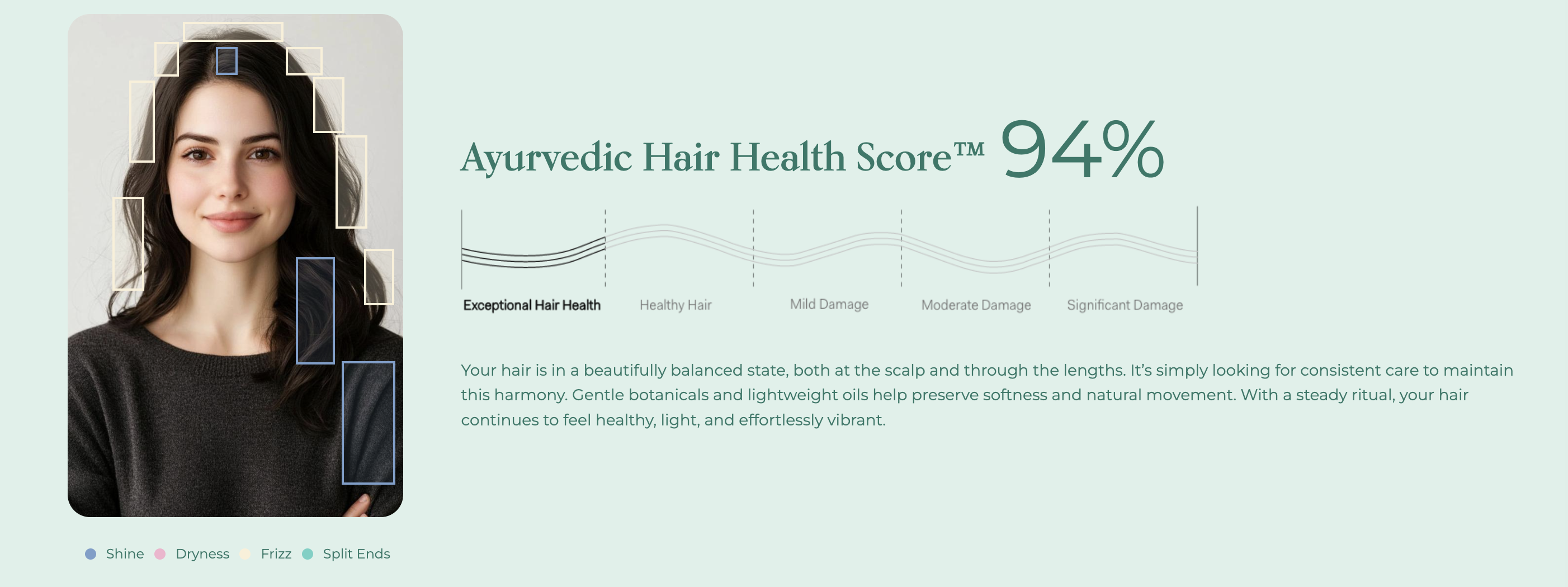
Personalized hair analysis and routine recommendations on Shaz and Kiks powered by Tangent AI

Personalized hair analysis and routine recommendations on Shaz & Kiks, powered by Tangent AI

Enterprise AI Hair Personalization Platforms

Enterprise platforms are designed for large retailers and global beauty conglomerates. The diagnostic capabilities are often strong, but they come with significant implementation complexity, dedicated engineering requirements, and pricing structures built for organizations operating at a very different scale than most DTC brands.

E

Enterprise Beauty Platforms

Best for: Large retailers and global beauty groups with dedicated tech teams, multi-month implementation budgets, and omnichannel deployment needs

Several enterprise beauty AI platforms offer hair personalization as part of a broader suite covering skin, hair, and makeup. These are the tools powering large department store beauty counters and multi-brand retail environments, and they're genuinely impressive at that scale.

The tradeoff is that everything making them powerful at enterprise scale also makes them a poor fit for a Shopify DTC brand. There's no app store install. Implementation typically runs several months and requires dedicated technical resource on your side. Pricing is structured around enterprise contracts, not monthly SaaS plans. And the platform logic is built for retailers managing thousands of SKUs across multiple banners, not a single Shopify store.

Limitations for Shopify Haircare Brands

βœ•No native Shopify App Store integration, requires custom development
βœ•Enterprise pricing and contract structure not suited to DTC brands
βœ•Multi-month implementation timeline before going live
βœ•Built for retail and department stores, not DTC Shopify operators

AI Hair Analysis APIs

API tools give you the raw analysis engine but nothing else. The quiz, the recommendation logic, the results page, the Shopify integration, the CRM sync: all of that needs to be built separately by your development team.

A

API-Based Hair Analysis Tools

Best for: Brands with in-house engineering teams who need a fully custom-built experience and are prepared to invest in the full development cycle

There are a handful of computer vision APIs that include hair analysis as part of their model offering. The underlying technology can be solid, and if you genuinely need a fully custom-built experience, these APIs give you something to build on.

The catch is that the API is just the starting point. You still need to design and build the quiz experience, the recommendation logic, the results page, the Shopify catalog integration, and the CRM sync. For a brand that wants to be live in weeks rather than quarters, this category isn't the right fit.

Limitations for Shopify Haircare Brands

βœ•API only, everything else needs to be built from scratch
βœ•No recommendation engine or results page included
βœ•No Klaviyo or CRM sync out of the box
βœ•Significant time-to-market and ongoing engineering cost

General Quiz Builders

General quiz builders let you create a question-based product recommendation flow without code. They're fast to set up and work well as an entry point, but they're not built for hair specifically and the limitations become real as your data strategy matures.

Q

General-Purpose Quiz Builders

Best for: Early-stage brands wanting to test guided selling quickly, before investing in a hair-specific personalization platform

General quiz builders are a popular starting point for DTC brands, and for good reason. They're accessible, self-serve, and quick to launch. For haircare brands just getting started with guided selling, they can help prove the concept fast.

The limitation is that personalization depth depends entirely on the questions you write. There's no underlying hair diagnostic model, no selfie analysis, no intelligence about what differentiates fine low-porosity hair from coily high-porosity curls. As your catalog grows and your data strategy becomes more sophisticated, most brands find they outgrow general quiz tools fairly quickly.

Limitations for Haircare Brands Specifically

βœ•No selfie-based hair analysis, answers only with no image diagnostics
βœ•No hair-specific diagnostic model or AI recommendation intelligence
βœ•No AI Chat Assistant or conversational personalization
βœ•Limited first-party data depth for lifecycle marketing

How the Four Categories Compare

A quick reference across the criteria that matter most for Shopify haircare brands.

Feature Tangent AIEnterprise PlatformsAPI Tools Quiz Builders
Shopify App Store installβœ“βœ•βœ•βœ“
AI selfie hair analysisβœ“LimitedAPI onlyβœ•
Hair diagnostic depthβœ“βœ“API onlyβœ•
Personalized routine recommendationsβœ“βœ“βœ•Product tags only
AI Chat Assistantβœ“βœ•βœ•βœ•
Klaviyo and CRM integrationβœ“Customβœ•βœ“
Multi-market and multilingualβœ“βœ“API onlyLimited
No custom dev requiredβœ“βœ•βœ•βœ“

Based on publicly available platform documentation as of June 2026. Tangent AI results drawn from published case studies.
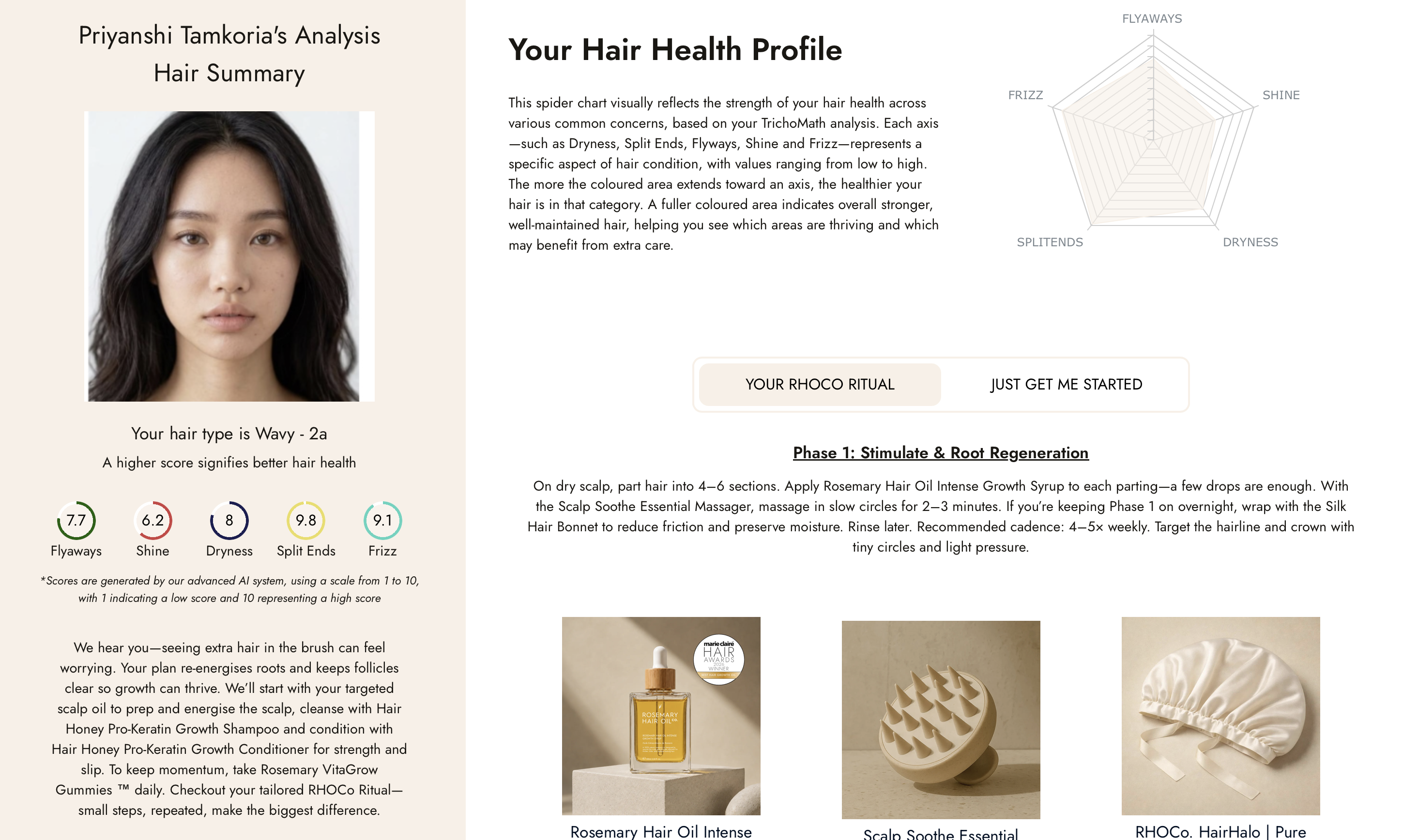
Personalized hair health profile and routine recommendations on Rosemary Hair Oil powered by Tangent AI

Personalized hair health profile and routine recommendations on Rosemary Hair Oil, powered by Tangent AI

Which Type Is Right for Your Brand?

The honest answer depends on your current stage, your technical resources, and how quickly you need to see results.

πŸš€
Scaling DTC haircare brandAn all-in-one platform is the right move. Native Shopify install, full hair diagnostic depth, selfie analysis, Klaviyo sync, and results you can point to from similar brands. No dev resource needed. This is the category that makes sense for most haircare brands reading this.
πŸͺ
Large retailer or global beauty groupEnterprise platforms can make sense if you have a dedicated tech team, a multi-month implementation runway, and genuine omnichannel needs across retail and DTC. Go in with clear eyes on the timeline and total cost.
πŸ› οΈ
Custom build with engineering resourcesA raw API gives you the analysis layer to build on if you have developers and a specific UX vision that no off-the-shelf platform can match. Factor in the full build cost before committing.
🌱
Very early stage, testing the conceptA general quiz builder can help you prove that guided discovery works for your customers before investing in a dedicated platform. Just know you'll likely want to migrate once your data strategy and catalog grow.

Questions We Get Asked a Lot

It uses computer vision or quiz logic to assess hair type, porosity, density, and scalp condition, then recommends products suited to that profile. The best platforms combine selfie analysis with questions for higher accuracy.
Porosity determines how hair absorbs and retains moisture. Get it wrong and the product doesn't work, which leads to returns. Platforms that detect porosity through selfie analysis get recommendations right more often.
Depends on the platform. Enterprise tools and APIs need custom dev. Tangent AI installs directly from the Shopify App Store with no development required.
Tangent syncs hair profile data to Klaviyo as custom properties, powering personalized flows like routine recommendations, replenishment reminders, and launch campaigns targeted by hair type.
Particularly well. Curl patterns from 3A to 4C change recommendations significantly. InHAIRitance used Tangent's curl segmentation across 12 landing paths, driving a 42% AOV uplift and 79% first-time order rate.
Ready to see similar results?

Turn Every Shopper Into a
Confident Buyer

  • Increase conversion and AOV
  • Capture rich first party customer data
  • Scalable, always on personalization