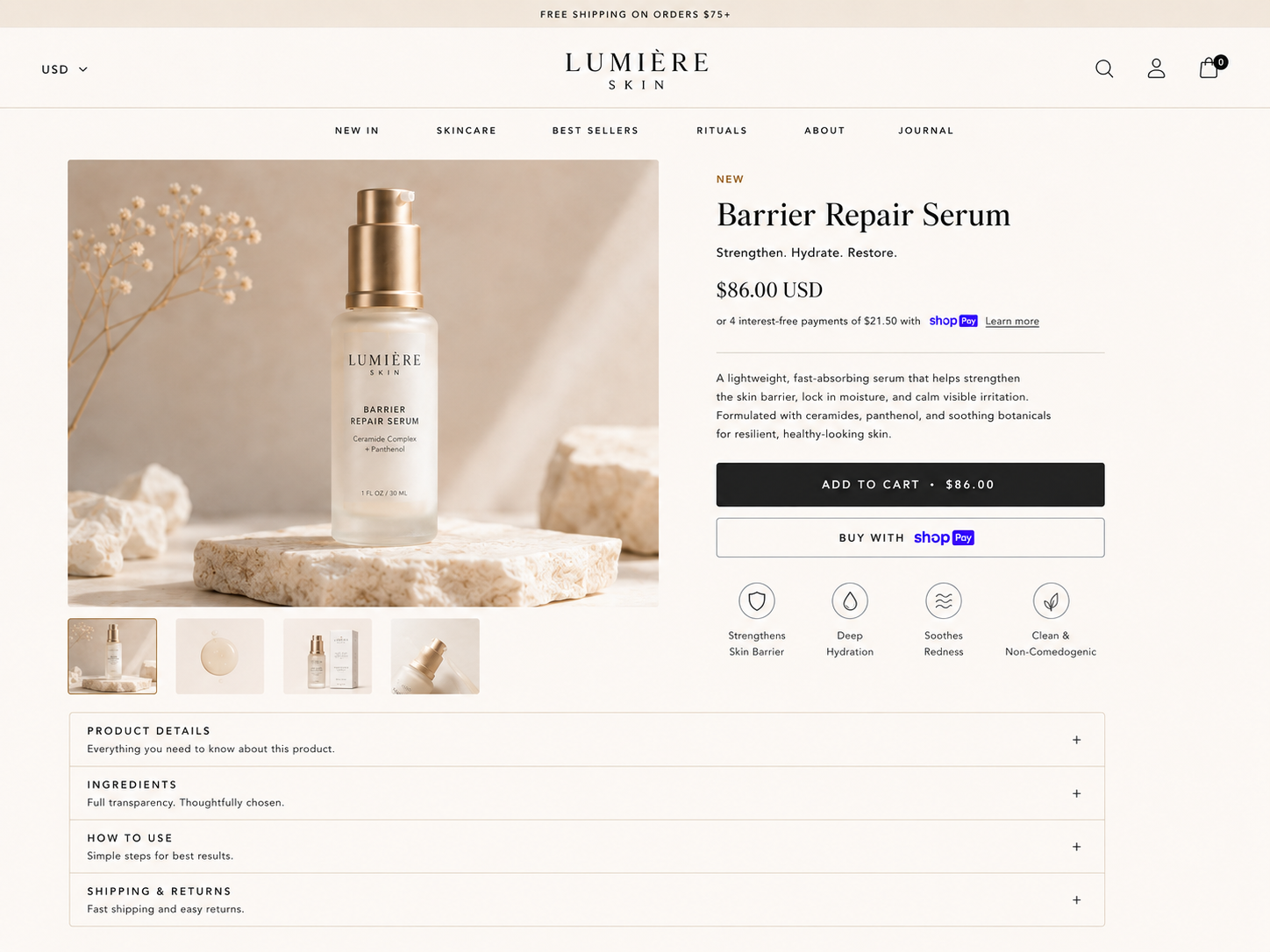
More beauty shoppers now arrive on a product page directly, from search, ads or an AI assistant, and skip the homepage and the quiz entirely. PDP personalization changes what that page shows based on who is reading it, so a shopper with sensitive skin and a shopper with dry skin each see the reasons this product fits them.
Sources: NielsenIQ, State of Beauty 2026; McKinsey, 2021.
In short: A beauty product page usually shows every visitor the same benefits, the same ingredient list and the same "pairs well with" row. PDP personalization uses what a brand already knows about a shopper, such as quiz answers, stated concerns and past purchases, plus context like season and climate, to lead with the benefits, guidance and routine steps that matter to that person. It matters most for shoppers who land on the product page first and never see the quiz.
Most beauty brands put their personalization effort into a skin or hair quiz. The quiz is useful, but it only helps the shoppers who find it and finish it. Everyone else lands on a product page and reads the same copy, whatever their skin type, hair concern or climate.
That gap is growing. NielsenIQ's State of Beauty 2026 report found 49 percent of consumers already receive beauty recommendations from generative AI, and more than half are exploring AI shopping tools. A shopper who asks an assistant for a serum for redness-prone skin often clicks straight through to a product page. That page is the first and sometimes only part of the brand's site they see.
This guide covers why a static product page underperforms in beauty, what personalization can change on the page, how it works for shoppers you know and shoppers you don't, and how to roll it out on Shopify.
A beauty product page has to answer one question for every visitor: will this work for me? A page written for everyone answers it for no one in particular.
PDP personalization adapts a product detail page to the shopper viewing it, using their stated needs, past interactions and context, so the page leads with what matters to them.
The page leads with the benefits, ingredients, usage guidance and FAQs most relevant to the shopper's concern, instead of one fixed order for everyone.
Pairings suggest the complementary product that fits the shopper's profile, informed by what shoppers with similar needs buy together.
Signals such as location, weather and season shift emphasis when they change what matters, for example hydration in cold, dry months.
The product and its claims stay the same. What changes is the order, emphasis and guidance each shopper sees first.
| Shopper Profile | What the Page Leads With | Suggested Next Step |
|---|---|---|
| Redness and sensitivity | Calming and barrier support, gentle use guidance, and answers to common sensitivity questions | A gentle cleanser or barrier-support step |
| Dryness and seasonal change | Hydration, texture and how the product performs in colder or drier conditions | A richer moisturizer or overnight step |
| Fine lines and routine goals | Targeted benefits and where the product sits in a longer-term routine | A supporting treatment step and daily SPF |
Personalization should only reorder and emphasize what is already true of the product. It should never invent a claim for one audience that the product doesn't support for everyone.
The page can only personalize with signals the brand actually has. How much it changes depends on who is visiting.
In every case, previously collected data is reused only when the shopper can be recognized and their privacy preferences allow it. A shopper who hasn't been identified, or who has opted out, sees the page tailored by context alone or the standard version.
One more limit worth stating plainly: personalization uses the brand's own first-party data and on-site signals. It has no access to a shopper's private AI conversation or search history, so a page can't know what someone asked an assistant before they clicked. That is why brands also work on visibility in AI search separately from what happens on the page.
The effect shows up in a few places a beauty brand already tracks.
McKinsey's research found that 71 percent of consumers expect companies to deliver personalized interactions, 76 percent get frustrated when that doesn't happen, and personalization most often drives a 10 to 15 percent revenue lift. That research spans multiple industries, not beauty specifically, and results vary by brand and execution.
On a beauty product page, the gains tend to come from three places. A shopper who sees why a product fits them is more likely to add it to cart, which supports the conversion work a brand is already doing. A routine step suggested for their profile is a more natural add-on than a generic bestseller, which supports average order value. And a shopper who understands how to use a product is less likely to give up on it early.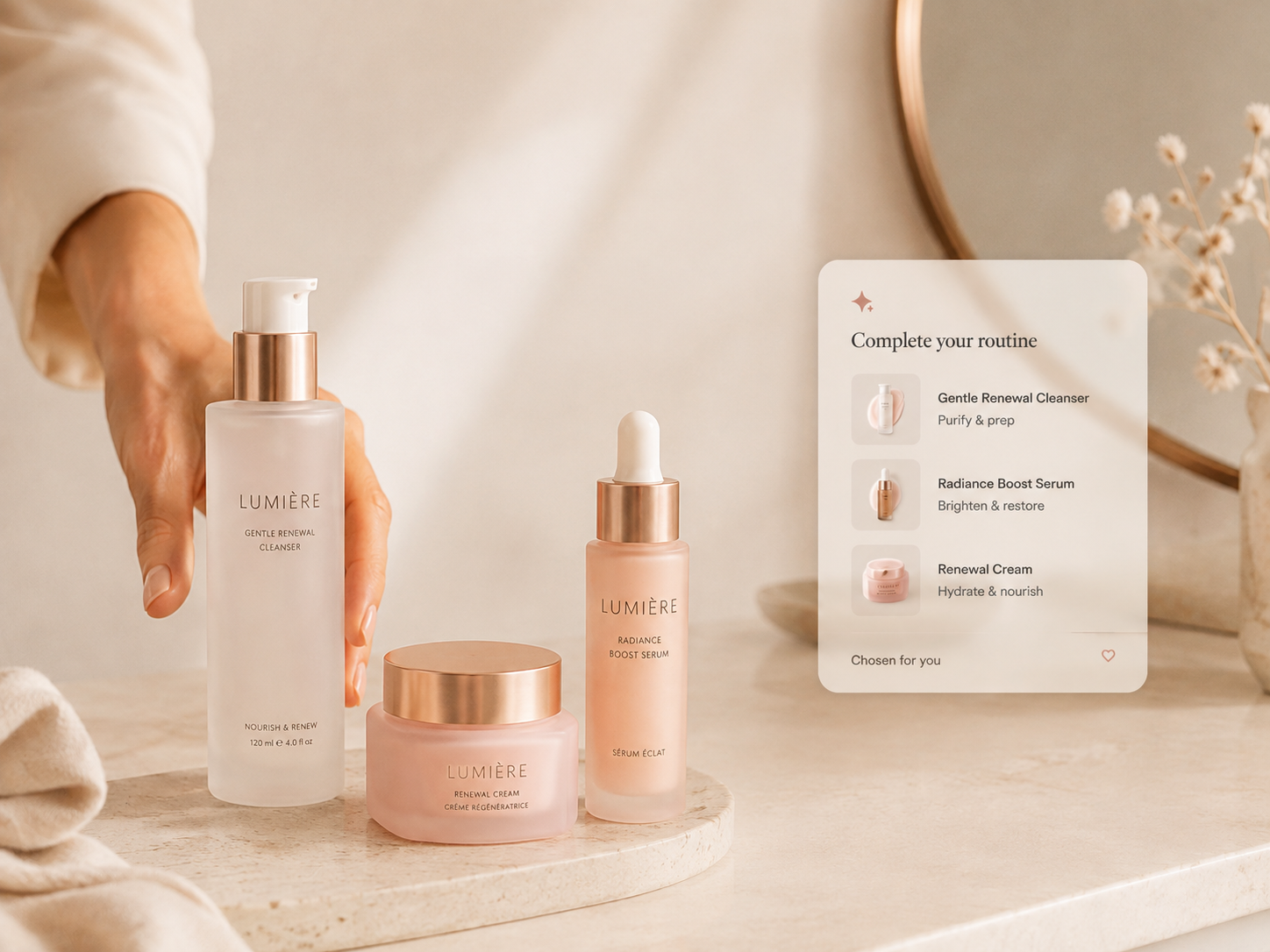
The steps that matter most for a Shopify beauty brand starting out, in order.
Before you start, your team needs five things ready: benefit and usage content for each priority product, broken out by concern; the shopper attributes you collect and where they live, such as quiz answers in your Shopify customer records or Klaviyo; recommendation rules for which product follows which; a theme integration point on the product page template where personalized blocks can appear; and a testing plan, so you can compare results against the standard page.
It adapts a product detail page to the shopper viewing it, using quiz answers, first-party shopper data and context such as season and location, so the page leads with the benefits, guidance and routine steps that matter to that person.
No. When the shopper can be recognized and their privacy preferences allow it, answers they have already given can carry over to the product pages they visit afterwards.
With no profile yet, the page can use context such as location and season, and offer a short in-page question or a quick AI skin or hair analysis to tailor what follows.
It shouldn't. Good PDP personalization reorders and emphasizes what is already true of the product. It never adds a claim for one audience that the product doesn't support for everyone.
AI assistants and search engines often send shoppers straight to a product page. Personalization makes that first page more relevant when the brand has signals to use, but it has no access to the shopper's private AI conversation or search history.
It extends the quiz rather than replacing it. Quiz answers already feed recommendations, email flows and customer profiles. PDP personalization brings the same knowledge onto the product pages a shopper visits, and also gives shoppers who never take the quiz a more relevant page.
Run an A/B test among eligible shoppers, with one group seeing the personalized page and the other the standard version, and compare conversion, add-to-cart rate, average order value and revenue per visitor. Comparing quiz-takers with everyone else overstates the effect, because they tend to be more engaged already.