Most beauty brands focus on getting more traffic. The ones growing fastest are getting more from every order. Here is what actually moves AOV in beauty, with real data from skincare and haircare brands doing it now.
Source: Tangent AI customer data. Three Ships, The Detox Market, Bondi Boost case studies.
Average order value is the most overlooked growth lever in beauty ecommerce. Most brands spend the majority of their marketing budget trying to acquire new customers, but the math often does not work: acquisition costs are rising, and a single-product first purchase rarely covers them.
The brands growing fastest in 2026 are not just acquiring more. They are getting meaningfully more from each order. A shopper who spends $120 on their first purchase is worth fundamentally more than one who spends $40, and the difference usually comes down to one thing: whether the brand gave them a reason to buy more than one product at once.
This guide covers the four tactics that consistently move AOV in beauty, why some approaches work better than others, what the data shows across real Shopify brands, and how to know which tactic to start with based on where your brand is right now.
Quick Answer
The fastest way to increase AOV for Shopify beauty brands is to move shoppers from single-product recommendations to personalized routines. In beauty, larger baskets happen when customers understand which products work together for their specific skin type, hair profile, concerns, and goals. Brands using AI-guided discovery consistently see 25 to 80% AOV lift from baseline within 90 days.
Doubling your conversion rate is hard. Doubling your AOV is often achievable in weeks. Here is why it deserves more attention than it gets.
These are not generic ecommerce upsell tips. Each one is specific to how beauty shoppers actually make purchasing decisions.
The single most impactful AOV lever in beauty is recommending routines instead of individual products. When a shopper completes a skin quiz and sees a four-step routine matched to their skin type and concerns, the default behavior shifts from "I will buy one thing and see how it goes" to "I will start with the full routine."
This works because the routine recommendation carries a logic the shopper trusts. Each product is there for a reason that was explained to them based on their own answers. A generic bundle does not have that trust signal. A personalized routine does.
One of the reasons shoppers hesitate to add multiple products to a cart is uncertainty. They are not sure the products are actually right for them. A quiz helps, but a quiz that also analyzes a selfie to confirm their hair type or detect skin concerns removes a layer of doubt that text-based questions cannot.
When a shopper sees their own face analyzed and their specific concerns identified, the confidence in the recommendation goes up significantly. Higher confidence means higher willingness to commit to a full routine rather than a single test purchase.
Most beauty shoppers arrive without knowing which products are right for them. Left to browse independently, they default to what they recognize or what has the most reviews. Neither of those paths naturally leads to a multi-product basket.
A guided quiz changes the entry point. Instead of browsing, the shopper is taken through a diagnostic that understands their skin or hair, then presented with a curated selection that solves their specific problem. The shopping journey becomes consultative rather than transactional, and consultative journeys produce larger baskets.
Not every shopper who completes a quiz buys immediately. Some take the quiz, see the recommendation, and leave. The intent is there but the timing is wrong. A post-quiz email flow that re-serves their personalized routine in their inbox, days later, captures orders that would otherwise be permanently lost.
Critically, this email should not be a generic nudge. It should reference their specific quiz results: their skin type, their concern, the exact products recommended. A shopper who sees their own profile reflected back in an email is far more likely to convert than one receiving a generic "do not forget your cart" message.
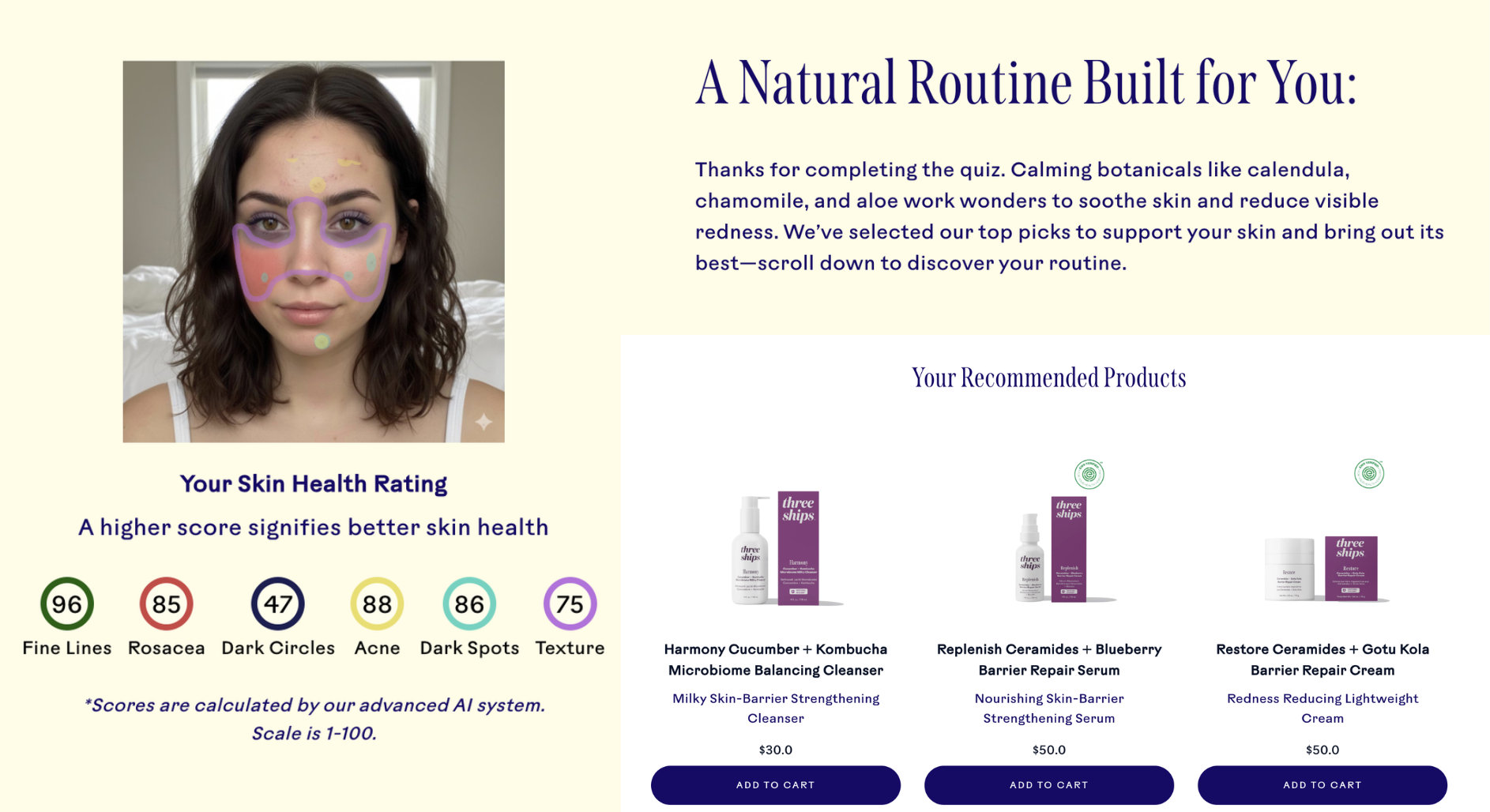
Personalized routine recommendations powered by Tangent AI, driving measurable AOV lift across beauty and haircare brands
Not every ecommerce AOV playbook applies to beauty. These are the approaches that consistently underdeliver in this category.
Not every brand needs to build all four at once. Here is how to prioritize based on your current setup.
Start with Tactic 1 and 3 together. Launch a guided quiz that recommends routines rather than single products. This is the single highest-impact AOV move available and it starts working from day one.
Move to routine recommendations immediately. This is often the fastest AOV win available because the quiz infrastructure already exists. You are just changing what the quiz outputs from one product to a curated routine.
Add Tactic 4. The quiz data is sitting in your platform and not reaching Klaviyo. Connecting the two and building a post-quiz flow captures orders from the significant percentage of quiz takers who did not convert on the day.
Focus on Tactic 2. Add selfie analysis to increase recommendation confidence and conversion on existing quiz traffic.
These results come from Shopify beauty and haircare brands using AI-guided discovery and routine recommendations through Tangent AI.
Personalized routine recommendations matched to skin type and concern, with first-party data synced to Klaviyo from day one.
AI skin analysis and guided discovery across a multi-brand marketplace, driving high-intent shoppers from quiz to routine purchase.
AI selfie hair analysis combined with guided quiz logic and Klaviyo-powered post-quiz flows across US and Australian markets.
AI skin analysis connected to personalized Klaviyo flows, turning one-time buyers into repeat customers through profile-matched replenishment.
Source: Tangent AI customer data.
It varies by category and price point. What matters more than the absolute number is the trend. Brands using AI-guided discovery and routine recommendations consistently see 25 to 80% AOV lift from baseline within the first 90 days.
Switching from single-product to routine recommendations is the fastest lever. When a shopper is guided to a 3 or 4 product routine, basket size grows immediately without needing more traffic or a higher conversion rate.
Consistently yes. Personalized routine recommendations give shoppers a reason to buy more than one product, and they trust the recommendation because it was built for their specific profile. Generic upsells do not have that trust signal.
Not when the recommendation is personalized. Generic upsells sometimes hurt conversion because they feel irrelevant. Personalized routine recommendations increase both confidence and basket size at the same time.
Routine Bundles present a curated set of complementary products matched to the shopper's skin or hair profile. Because each product in the bundle has a reason to be there, the add-to-cart rate on multiple items is significantly higher than with generic bundle offers.